
Do you struggle to pick the right valve for your project? Picking the wrong one causes leaks and wastes money. We can help you choose the best option. The main difference between a ball valve vs globe valve is their function. You use a ball valve for fast on-off control with high flow. You use a globe valve to regulate and control the exact fluid flow rate. Your choice depends on whether you need isolation or throttling.
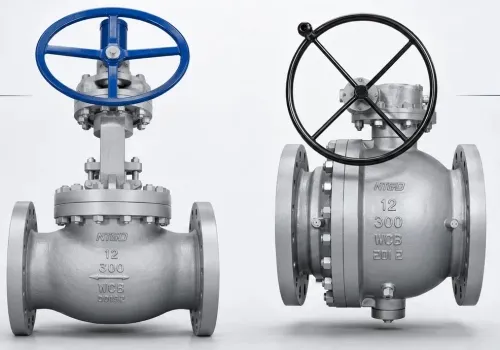
You might feel confused when you look at all the valve options. Let us break down the exact differences so you can make a smart choice for your pipeline.
Broken valves cause expensive downtime. You lose money when internal parts fail. Knowing the internal design helps you prevent these costly system failures. A ball valve uses a hollow, rotating sphere to start or stop the flow with a fast 90-degree turn. A globe valve uses a movable plug that goes up and down against a fixed seat to adjust the flow rate slowly and safely.
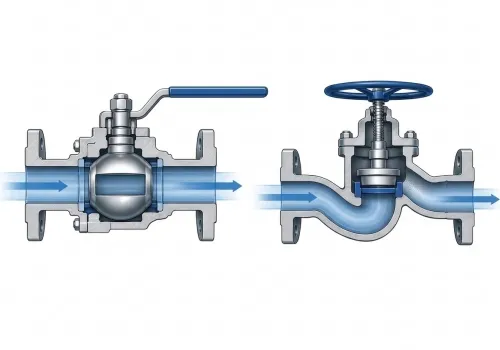
These two valves look very different inside. We need to look closely at their moving parts to understand how they work.
The internal design of a ball valve is simple and effective.
· The seats use soft materials (like PTFE or nylon).
· You only turn the handle a quarter way to fully open or close the line.
· The fluid flows straight through the hole. This simple design means fewer things break during daily operations. Engineers call this a quarter-turn mechanism. You do not need much effort to turn the handle.
The globe valve has a much more complex body.
· The fluid changes direction twice inside an S-shaped path.
· It uses a metal plug or disc that moves in a straight vertical line.
· You must turn the handwheel many times to lift the plug away from the seat.
· The seats use hard metal materials to handle high pressure.
| Feature | Ball Valve | Globe Valve |
|---|---|---|
| Motion | Rotary (90 degrees) | Linear (up and down) |
| Flow Path | Straight line | S-shaped curve |
| Sealing Material | Mostly soft seats | Mostly metal seats |
| Opening Speed | Very fast | Slow and steady |
Poor flow control damages your pipes. High pressure drops increase your pumping energy bills. You must match the valve to your flow needs to save energy. Globe valves offer great flow control but cause a high pressure drop because of their S-shaped internal path. Ball valves give poor flow control but have almost zero pressure drop because the fluid travels in a straight line without restrictions. Fluid moves differently through these two valves. You need to understand flow capacity and resistance to build an efficient system.
Flow regulation means adjusting how much fluid passes through the pipe.
· Globe valves excel at throttling. You can set the plug at any exact height to manage the precise amount of water, gas, or steam.
· Ball valves fail at throttling. If you leave the sphere half-open, the fast-moving fluid will quickly scratch and ruin the soft plastic seats.
We measure flow capacity using the Flow Coefficient (CV). A higher CV number means more fluid passes through easily without losing pressure.
· A standard 2-inch ball valve has a CV of around 150. The fluid meets no resistance.
· A standard 2-inch globe valve has a CV of around 40. The fluid hits the inner walls and loses energy.
| Flow Metric | Ball Valve | Globe Valve |
|---|---|---|
| Flow Coefficient (CV) | High | Low |
| Fluid Resistance | Very low | Very high |
| Throttling Quality | Poor | Excellent |
| Pressure Loss | Close to zero | Significant |
Frequent repairs ruin your project budget. Buying a cheap valve might cost you much more later. You need to calculate the true long-term costs. Ball valves have lower maintenance costs because they have fewer moving parts and simple soft seats. Globe valves require more maintenance to fix the metal seats, but they last much longer in extreme high-temperature and harsh industrial environments.
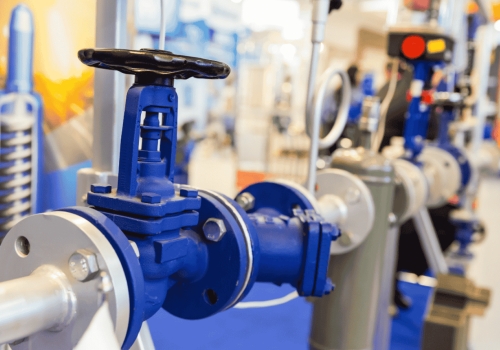
Cost matters when you buy hundreds of units for a big project. The cheapest price tag is not always the best long-term deal.
The initial price depends heavily on the size and body material.
· Small sizes (under 2 inches) usually cost exactly the same for both types.
· Large sizes make ball valves much more cost-effective due to simpler bodies.
· High-pressure ratings make globe valves cheaper because their thick metal bodies handle stress better.
You must pay workers to fix leaking pipelines. Labor costs add up quickly.
· Ball valves rarely leak in clean water or gas systems. The wiping motion keeps the seats clean every time you turn the handle. You can easily replace the soft seats by dropping in new plastic rings.
· Globe valves catch dirt and sand easily. The dirt scratches the metal seat. You must use special tools to grind the seat flat again.
| Cost Factor | Ball Valve | Globe Valve |
|---|---|---|
| Initial Cost (Large Size) | Lower | Higher |
| Repair Complexity | Easy | Hard |
| Wear and Tear | Low in clean fluid | High with dirty fluid |
| Typical Lifespan | 10+ years (clean media) | 15+ years (steam/heat) |
At Eflow Valve, I see many buyers switch to rotary options for basic water lines. They save up to 30% on yearly maintenance labor. However, you still need linear valves for harsh steam pipes.
Q: What is the main difference in the ball valve vs globe valve working principle?
A: A ball valve uses a fast 90-degree turning motion to open or close the flow completely. A globe valve uses a slow linear up-and-down motion to adjust the flow rate.
Q: Can I use a ball valve to control the flow rate?
A: No, you should not use it for flow regulation. The high-speed fluid will easily ruin the soft internal seats if you leave the valve half-open.
Q: Which valve handles high-temperature steam better?
A: A globe valve handles high-temperature steam much better because it uses thick metal seats. Soft seats in rotary valves will melt under high steam heat.
Q: Does a globe valve reduce water pressure?
A: Yes. The internal S-shaped path forces the fluid to change direction twice. This causes a significant pressure drop across the line.
Choosing a ball valve vs globe valve depends on your exact flow control needs. We hope this guide helps you. Contact Eflow Valve to order your reliable industrial valve today.



 English