
Are you struggling with tight pipeline layouts? You might wonder if changing the valve orientation causes leaks. I will show you the exact rules for globe valve placement. Yes, can a globe valve be installed vertically? Absolutely. You can install globe valves in any position on vertical or horizontal pipelines. However, you must never install them with the stem facing downwards. The flow direction must also match the arrow on the valve body.
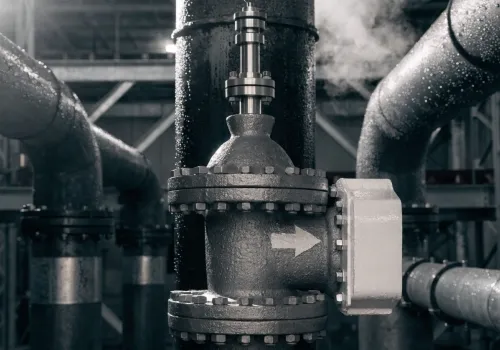
Read on because I will share the critical installation mistakes that ruin valves. These tips will save your EPC projects from costly downtime and pressure failures.
Pipe stress cracks valve bodies. If your pipes shake or bend, your new valve will break fast. I have seen this destroy many expensive cast iron valves. You protect the valve by ensuring pipes do not apply bending, twisting, or compression forces. Flanges must align perfectly. You should install the valve on stationary supports or use axial compensators on long straight pipe runs.
When you ask, "can a globe valve be installed vertically", you must also think about pipe weight. Vertical pipes push down heavily on the valve. You cannot use the valve body to support the pipeline weight. If you force misaligned flanges together, the valve body will crack. I always tell my clients at Eflow Valve to check flange alignment before tightening any bolts. Do not use extra thick gaskets to fix a bad pipe angle. This creates weak spots. For long vertical pipelines, temperature changes make the metal expand and shrink. This movement puts huge stress on the valve. You must use pipe supports under the valve and the connected pipeline for any sizes larger than DN 100 mm. This removes the weight burden from the valve body. Here is a quick guide on flange gasket materials to handle different pressures and temperatures:
| Gasket Material | Max Pressure (bar) | Temperature Range (°C) | Best Application |
|---|---|---|---|
| EPDM Rubber | 16 | 0 to 60 | Cold water systems |
| PTFE | 70 | -120 to +150 | Chemical pipelines |
| Paronite | 63 | -50 to 450 | High heat steam |
Always pick the right gasket. A bad gasket causes dangerous leaks in vertical setups.
Backwards flow destroys valve internals. Many installers put the valve in backward because they do not check. This mistake costs thousands of dollars to fix. Globe valves are unidirectional. The fluid must flow under the valve disc and follow the body arrow. Do not use them in reverse. If using an electric actuator, you must install the stem pointing vertically upwards.
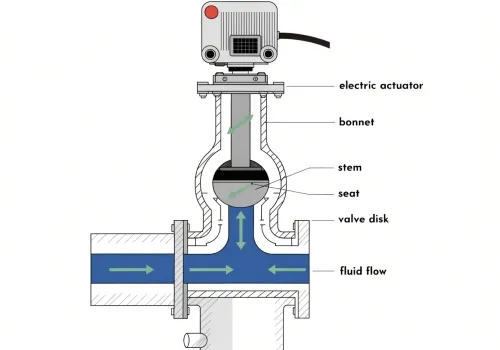
The flow direction matters a lot. When engineers ask me if can a globe valve be installed vertically, I always remind them about the flow arrow. The working medium must enter from below the plug. This design helps the valve seal tightly. It also makes the valve easier to open against high pressure. If you install it backward, the pressure pushes on top of the plug. This rips the plug off the stem over time. Reverse mode leads to valve breakage. Electric actuators add another rule. The electric drive motor is heavy and sensitive. You must keep the stem facing straight up. If you turn it sideways, the heavy motor bends the stem. This wears out the packing seal and causes leaks. Also, if you install the electric actuator outdoors, you must arrange a shelter over it. Rain and sun ruin electric parts fast. Here is a summary of installation rules based on valve type:
| Valve Type | Allowed Stem Position | Flow Direction Rule | Outdoor Protection |
|---|---|---|---|
| Manual Handwheel | Up, Sideways (Not Down) | Follow body arrow | Not required |
| Gear Operated | Up, Sideways (Not Down) | Follow body arrow | Recommended |
| Electric Actuator | Strictly Upward | Follow body arrow | Mandatory cover |
Follow these rules, and your Eflow Valve products will last for decades.
Loose bolts cause leaks. Overtightened bolts break flanges. You lose money if the pipeline fails the hydraulic test. I will explain the exact steps to succeed. You must use specific tightening torques based on bolt size. After installation, you must test the pipeline for strength. During this hydraulic test, you must keep the valve disc fully open or fully closed. Never test in middle positions.
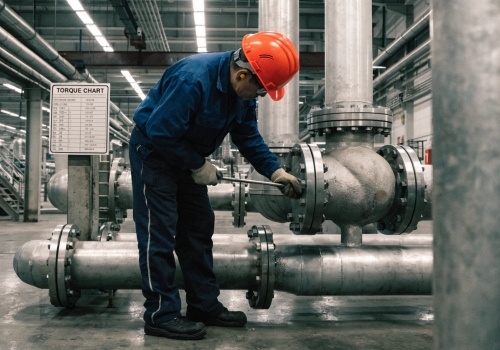
Installation does not end when the pipe connects. You must secure the flanges correctly. If you just guess the bolt tightness, you will have problems. You must use a torque wrench. Tighten the bolts in a cross pattern. This keeps the pressure even across the whole gasket. You cannot align the flange angle using additional gaskets and tightening bolts. Before you put the valve in the pipeline, open and close the valve disc two or three times. This checks if the parts move freely. When you transport and install large diameter valves, you must use the factory lifting lugs. Never tie lifting ropes to the handwheel, gearbox, or electric actuator. The handwheel will break off and the valve will drop. Finally, you must run a hydraulic pressure test. Make sure the valve is fully open or fully closed. If you leave it half open, the test fluid damages the sealing faces. Use this torque table for your flange connections:
| Valve Size (DN) | Bolt/Nut Size | Required Torque (Nm) |
|---|---|---|
| 15 - 32 | M 10 | 15 - 30 |
| 40 - 65 | M 12 | 35 - 50 |
| 80 - 100 | M 16 | 75 - 100 |
| 125 - 150 | M 16 | 80 - 120 |
| 200 | M 20 | 150 - 200 |
| 250 - 500 | M 24 / M 27 | 340 - 410 |
Follow this chart to keep your pipelines secure and leak-free.
You can install globe valves vertically. Follow flow arrows, prevent pipe stress, and apply correct torques. Proper installation guarantees safety and saves your EPC company money.



 English