
Struggling to choose the right valve for your large pipeline? The wrong choice can lead to leaks, shutdowns, and costly repairs, damaging your project's budget and timeline. The best butterfly valves for large diameter pipe systems' industrial use are selected based on service medium, temperature, pressure, and operational frequency. For most industrial water applications, a double-offset design with a ductile iron body and stainless steel disc offers a great balance of performance and cost.
Choosing the right large diameter butterfly valve is more than just matching a size on a chart. It's about understanding the deep mechanics of your system and how the valve will perform for years to come. A choice made on paper can have huge consequences in the field. Let's explore the key factors you must consider to ensure you make the right decision from the start.
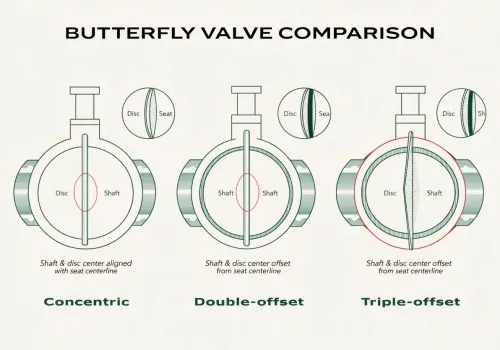
Your project's needs are unique, but the valve options can feel overwhelming. Picking a type based on price alone often leads to premature failure and operational headaches. A valve's design directly impacts its lifespan and performance. Concentric valves are cost-effective for simple water service, while double-offset designs reduce wear for higher-cycle duties. For high heat or critical shutoff, a triple-offset valve is the superior engineering choice.
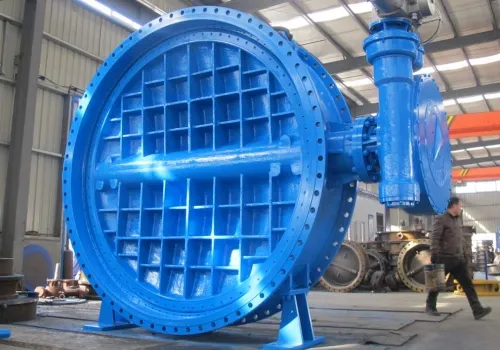
To go deeper, you need to understand how the geometry of the valve affects its function. Each type is engineered for a different purpose. At Eflow Valve, we help customers match the right design to their specific operational reality, not just the spec sheet.
The main difference between butterfly valve types is the "offset," which refers to how the stem and disc are positioned relative to the valve body and seat. This geometry dictates how the disc seals and how much wear and tear the seat endures over time.
| Valve Type | Primary Benefit | Common Application | Downside |
|---|---|---|---|
| Concentric (Zero Offset) | Lowest cost, simple design | General water services, HVAC | High seat friction and wear |
| Double Offset | Reduced seat contact, longer life | Industrial water, wastewater, mild chemicals | Higher cost than concentric |
| Triple Offset | Minimal seat rubbing, metal seat | High temp, high pressure, critical service | Highest cost, complex design |
Selecting a valve with the wrong materials is a recipe for disaster. Corrosion or material incompatibility can cause catastrophic failure, leading to safety risks and expensive downtime. The key is to match body, disc, and seat materials to your specific service medium, temperature, and environmental conditions. Never assume a standard material is "good enough." For example, EPDM seats are great for water but fail quickly with oils.
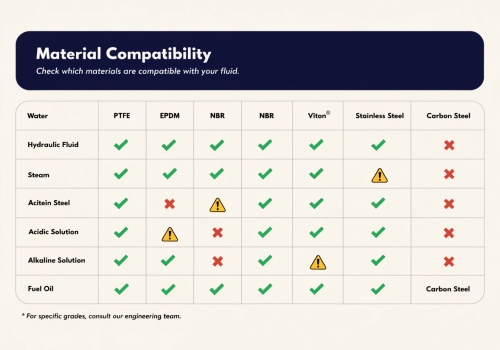
Choosing materials isn't just about what's inside the pipe. I've seen valves fail because of external environmental factors that were never considered. You need to think about the entire life of the valve, from installation to maintenance, in its real-world environment.
The fluid inside the pipe is your first consideration. But don't forget about cleaning agents, potential contaminants, or even the air during shutdown.
1.EPDM: Excellent for water, but not for hydrocarbons.
2.NBR (Buna-N): Good for oils and fuels, but less resistant to weather and ozone.
3.PTFE (Teflon): Excellent chemical resistance, but can be less flexible.
4.Metal Seat: Required for high temperatures (above 200°C) where soft seats would melt or degrade. Thinking through every material component is essential for butterfly valves for large diameter pipe systems' industrial use.
Your project isn't in a perfect lab; it's in the real world. Sourcing for international projects brings logistics, environmental challenges, and the risk of receiving the wrong product. Success requires a supplier who understands more than just valves. It requires a partner who has proven experience managing global projects, from precise specifications and quality control to complex shipping and on-site support. In my experience, this is where true partnership shows its value. I recall a major water infrastructure project we supplied in Nigeria. The client needed large diameter flanged butterfly valves for a new municipal water treatment plant. The environment was challenging, with high humidity and intermittent power affecting operations. We didn't just sell them valves; we worked with their engineers to select the right configuration. We chose a double-offset design with a robust ductile iron body. But critically, we specified a Duplex Stainless Steel disc and stem for superior corrosion resistance against the specific mineral content of the local water source. The actuator was also a key discussion. We recommended a gear operator with a high safety factor to ensure it could be operated manually and reliably, even after long periods of inactivity. This deep collaboration prevented the kind of failures they had seen with previous European suppliers who provided a "standard" solution. It's that hands-on, problem-solving approach that ensures long-term success.
What are large diameter butterfly valves best used for?
They are ideal for isolating or regulating flow in large pipelines (typically NPS 20 / DN500 and up) where space and weight are concerns. They are common in water treatment, HVAC, and power generation.
What is the difference between wafer, lug, and flanged types?
Wafer valves are held by flange bolts, making them compact. Lug valves have threaded "lugs" for bolts, allowing one side of the pipe to be removed. Flanged valves have their own flanges, creating a very strong but larger connection, which is often preferred for very large sizes.
When should I use a metal-seated butterfly valve?
Use a metal-seated (typically triple-offset) valve for services with high temperatures (above 200°C / 400°F), high pressures, or abrasive media where a soft, resilient seat would be destroyed.
Selecting the right large diameter butterfly valve comes down to a careful review of your application's unique demands. Partner with an expert to ensure your choice delivers safety, reliability, and value.



 English