
You spend a lot of money on high-quality valves for your project. You install them, and a week later, there is a leak. Why? Often, the problem is not the quality of the valve, but a simple mistake regarding the flow direction. Flow direction refers to the specific path fluid takes through a valve body. While many common valves work in both directions, a unidirectional ball valve has a specific inlet and outlet. Installing these backwards leads to leaks, seat damage, and can even cause dangerous pressure buildup in your system.
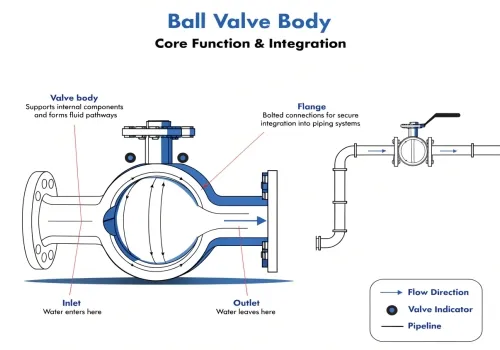
I have been in the valve industry for many years, and I see this happen all the time. An engineer assumes all ball valves are the same. They put the valve in backwards. Then, they call me complaining that the valve failed. It is a frustrating situation for everyone. But it is also very easy to avoid if you know what to look for. Let's look at the details so you can save time and money on your next project.
Many people think a ball valve is just a ball with a hole in it. They assume it works the same way no matter how you turn it. This is a dangerous assumption. The flow direction is the path the oil, gas, or water takes to get from the input side to the output side. In a unidirectional ball valve, the internal parts are designed to use the line pressure to create a tighter seal. If the flow comes from the wrong side, it pushes the seal away from the ball.
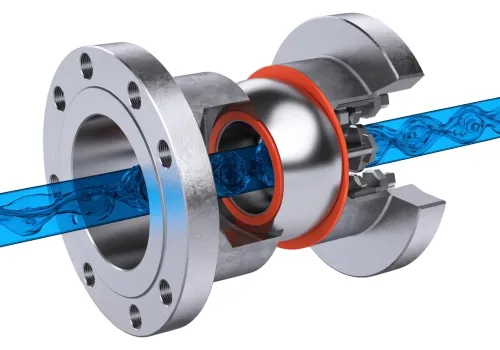
When we talk about flow direction, we have to look inside the valve. A standard ball valve uses a quarter-turn mechanism. The handle tells you if it is open or closed. If the handle is parallel to the pipe, it is open. If it is perpendicular, it is closed. However, the handle does not tell you the flow direction. In simple designs, the valve is symmetrical. The seats on both sides of the ball are identical. This means the media can flow left to right, or right to left. It does not matter. But in high-performance industrial applications, we often use designs where the pressure helps the valve work better. For example, in a unidirectional ball valve, the seat is often "spring-loaded" or designed to float. When pressure enters from the correct side, it pushes the ball firmly against the downstream seat. This creates a very tight seal. This is crucial for high-pressure gas lines or hazardous chemicals. If you install this valve backwards, the pressure works against you. It pushes the ball away from the seat. This causes internal leakage. In severe cases, the pressure can get trapped inside the valve body cavity. This trapped pressure can rise when the temperature changes, leading to a catastrophic failure of the valve body. This is why understanding the "upstream" and "downstream" sides of your specific valve model is not just a suggestion; it is a requirement for safety.
Choosing the right valve is about more than just size and material. You need to know if your system has flow that goes one way, or if it changes direction. Bidirectional valves can seal flow from either end. A unidirectional ball valve is strictly for one-way flow. You choose bidirectional for general utility lines to make installation easy. You choose unidirectional for critical process lines where you need the absolute best seal possible.
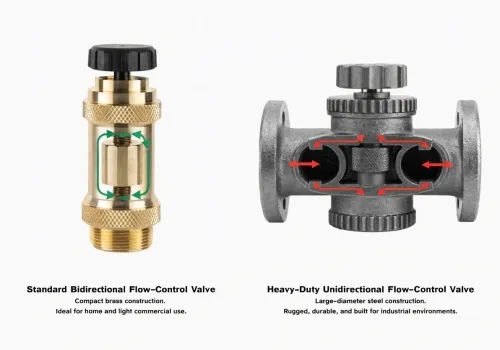
To help you understand the deep differences, I have broken down the features into a table. This will help you decide which one fits your EPC project needs.
| Feature | Unidirectional Ball Valve | Bidirectional Ball Valve |
|---|---|---|
| Flow Direction | Single direction (Inlet to Outlet). | Dual direction (Reversible). |
| Seat Design | Asymmetrical. Usually has a "pressure relief" feature. | Symmetrical. Both seats are identical. |
| Sealing Capability | Higher. Uses system pressure to enhance the seal. | Standard. Relies on the initial interference fit. |
| Installation | Critical. Must follow the arrow on the body. | Flexible. Can be installed in any orientation. |
| Common Use | High pressure, toxic media, steam, LNG. | Water lines, residential plumbing, low-pressure air. |
| Cost | Typically higher due to complex engineering. | Generally lower and more available. |
Why? Because of the "Cavity Relief" feature. In a unidirectional valve, if pressure builds up inside the ball cavity (the space between the seats), the design allows this pressure to vent automatically to the upstream side. This prevents the valve from exploding under thermal expansion. A standard bidirectional valve seals both sides, trapping that pressure inside.
Also, consider the wear and tear. Unidirectional valves are designed to handle the stress of flow hitting them from one specific angle. This protects the downstream equipment. If you use them in a reversible flow line, you will damage the seats very quickly. You must analyze your piping and instrumentation diagram (P&ID) carefully. If the line has backflow, pumps that reverse, or complex loops, stick to bidirectional. If it is a straight shot from a pump to a tank, the unidirectional option gives you better performance and safety.
You are on the job site. The valve is heavy, and the lighting is bad. How do you make sure you do not make a mistake that costs thousands of dollars to fix? The most reliable way to identify flow direction is to look for a cast arrow on the valve body. This arrow points from the inlet to the outlet. If you do not see an arrow, check the tag or the manual. Never guess based on the handle or the shape of the flange.
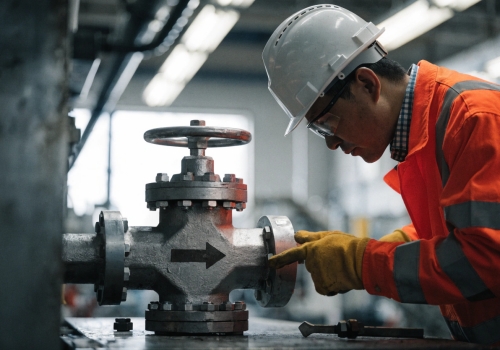
I have seen many installers make mistakes because they were in a hurry. Here is a simple process to ensure you get it right every time. First, look at the metal body of the valve. Manufacturers like us at Eflow Valve will cast or engrave an arrow on the body of every unidirectional ball valve. This is the gold standard. If the arrow points right, the fluid must go right. Second, if the valve is old or dirty and you cannot see an arrow, look at the tag. The stainless steel ID tag usually has a diagram or a text description. Third, look for a "vent hole" on the ball itself. This is a technical trick. If you can see the ball (when the valve is open before installation), look for a small hole drilled into the side of the ball. This hole is for pressure relief. That hole must face the upstream (high pressure) side when the valve is closed. If you install it the other way, the valve will leak. Common Installation Mistakes to Avoid:
1. Ignoring the Arrow: It sounds simple, but people ignore it. They think, "It fits, so it works."
2. Over-tightening: When you thread a valve, do not crank it too hard. This warps the body and ruins the seal.
3. Using the Wrong Sealant: Use the right Teflon tape or paste. Too much paste can get inside the valve and clog the seat.
4. Testing with Air: If the valve is made for liquid, testing it with high-pressure air can be dangerous. Always follow the pressure test procedure. Remember, once the valve is welded or bolted in, taking it out is a nightmare. It delays the project and makes you look bad. Take the extra two minutes to verify the flow direction against your system drawings. If you are ever unsure, stop. Call the manufacturer. It is better to ask a question than to replace a failed valve during startup.
Flow direction is not just a suggestion; it is critical for the safety and efficiency of your plant. Whether you are using a standard valve or a unidirectional ball valve, checking the arrow and installing it correctly ensures tight sealing and long life. If you need help choosing the right valve for your specific industrial needs, my team at Eflow Valve is ready to help you.



 English