
You need reliable flow control, but leaks and contamination worry you. Poor valves cause project delays. I will show you how to select the right equipment safely. Ball valves for water act as quarter-turn shut-off devices. They offer tight sealing, low maintenance, and durability. To ensure safety, especially for potable water, you must select corrosion-resistant materials like brass or stainless steel that meet specific international hygiene certifications.
Many suppliers claim quality, but few prove it. Let us look closer.
Old valves get stuck. Pipes burst. Your reputation suffers. You need a solution that works every time without failure. A ball valve uses a hollow sphere to stop or start flow with a simple 90-degree turn. This design minimizes pressure drop and allows for quick operation, making them ideal for both industrial water lines and residential plumbing.
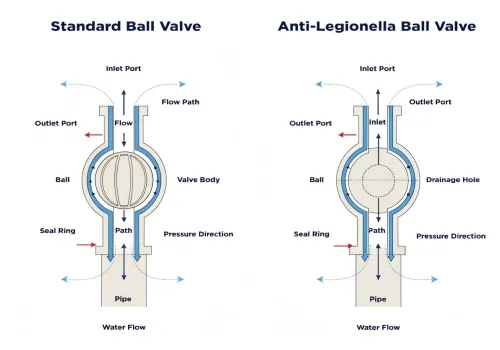
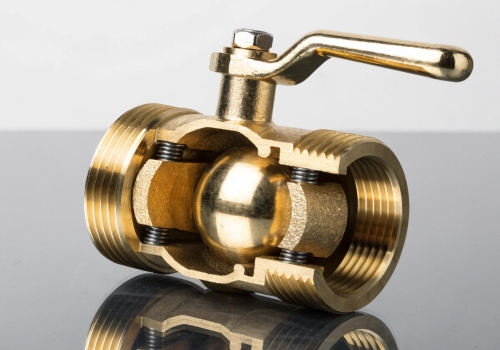
At Eflow Valve, we understand that efficiency is key for your EPC projects. A ball valve is a "quarter-turn" valve. This means you only turn the handle 90 degrees to open or close it fully. Inside, there is a ball with a hole. When the hole aligns with the pipe, water flows. When you turn it, the solid side blocks the water. This design is very popular in our industry for several reasons. First, they are durable. They keep working well even after years of use. Second, they create a tight seal. This prevents leaks. Third, they offer low resistance. Full-port valves have a hole the same size as the pipe, so they do not slow down the water flow. However, we must consider hygiene. In standard valves, a small gap exists between the ball and the housing. Water can get trapped here. If it sits too long, bacteria like Legionella can grow. For drinking water projects, we recommend "anti-legionella" valves. These have a special extra hole. It drains the water around the ball so it does not become stagnant.
| Feature | Standard Ball Valve | Anti-Legionella Ball Valve |
|---|---|---|
| Operation | 90-degree turn | 90-degree turn |
| Sealing | Tight seal | Tight seal |
| Dead Space | Traps water around the ball | Drains water around the ball |
| Best Use | General Industry/Irrigation | Drinking Water/Hospitals |
Inspectors reject non-compliant parts. Fines add up. You cannot afford to ignore local regulations. Compliance ensures your project gets approved faster. For projects involving potable water, ball valves for water must carry specific approvals like WRAS, NSF, or ACS. These certificates prove the valve materials will not contaminate the water or encourage bacterial growth over time.
As an EPC manager, you source materials for projects all over the world. Different countries have different rules. If you install a valve without the right paper, you might have to rip it out later. That costs a lot of money. At Eflow Valve, we ensure our products meet global standards. Here is a breakdown of what you need to look for based on your project location:
1. WRAS (United Kingdom): This is for the UK. It proves the valve does not waste, misuse, or contaminate water.
2. NSF (North America): This is vital for the USA and Canada. The NSF Water Division tests plumbing components to ensure they are safe for human health.
3. ACS (France): This is mandatory in France. It checks materials that touch water for human consumption.
4. DVGW (Germany): This is a strict German standard. It includes a test (W270) specifically to check for bacterial growth in the valve components.
5. WaterMark (Australia/New Zealand): You cannot legally install a valve in these countries without this mark. Buying a certified valve costs a little more initially. However, it saves you from legal risks. It guarantees that the chemicals in the metal or rubber seals will not leach into the water.
| Certification | Region | Focus |
|---|---|---|
| WRAS | UK | Regulatory Compliance |
| NSF | North America | Health & Safety |
| ACS | France | Material Safety |
| DVGW | Germany | Hygiene & Bacteria |
| Kiwa | Netherlands | Public Water Systems |
Corrosion eats profits. Replacements are costly. You want to install it once and forget it. Picking the right metal saves money. You must match the housing and seal materials to the water type. Brass and stainless steel resist corrosion, while seals like EPDM ensure a tight fit. Correct sizing handles the necessary pressure and temperature without failure.
When you select ball valves for water, you need to look at more than just the price. You need to look at the technical specs. Based on my experience at Eflow Valve, here are the critical factors you must define for your order. First, look at the Material.
· Seals: The soft parts inside are usually NBR or EPDM. The seats are often Teflon (PTFE). These must be food-grade if used for drinking water. Second, check the Flow Rate and Bore Size. You want to avoid pressure drops. A "Full Port" valve has a hole the same size as the pipe. This creates zero resistance. A "Reduced Port" is smaller and cheaper but slows the water down. Use our Kv calculator methods to ensure you get the right flow. Third, confirm Pressure and Temperature. Most water systems are low pressure, but industrial lines vary. Ensure the valve can handle up to 50 bar (725 psi) if needed. Also, check the temperature rating. Standard valves handle up to 150°C, which is plenty for water systems. Finally, check the Connection Type. Most water valves use threaded connections (BSP or NPT). Ensure the thread matches your pipes, or they will not fit.
| Spec | Recommendation for Water | Why? |
|---|---|---|
| Housing Material | Brass or Stainless Steel | Resists corrosion and is safe for health. |
| Seal Material | EPDM or NBR | Provides a long-lasting, watertight seal. |
| Port Type | Full Port | Maximizes flow rate and reduces pressure loss. |
| Connection | Threaded (BSP) | Standard for most water pipe sizes (1/4" to 2"). |
To select the best valve, prioritize safety certifications like WRAS or NSF, choose corrosion-resistant brass or steel, and ensure the design prevents stagnant water and bacterial growth.



 English