
Water contamination creates massive liabilities for your construction projects. You face tight deadlines and budget constraints, but you cannot compromise on safety. You need a reliable solution to stop dirty water from reversing flow and ruining your system integrity. This device is your first line of defense against these costly hazards. To answer the question of what is a dual check valve, it is a backflow prevention assembly containing two independent spring-loaded check valves in a series. It ensures that if one valve fails, the second blocks contaminated water from entering the potable supply, offering superior protection over single valves.
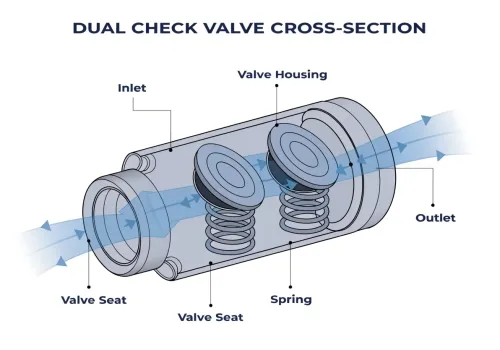
Many project managers overlook the specific mechanics of this valve during the procurement phase. This mistake leads to compliance failures later when inspectors check the site. Stop scrolling and read the next section to understand exactly how this component protects your project.
Equipment failure causes sleepless nights for purchasing managers. You want a system that works even when parts wear out or sediment builds up. This mechanism offers the redundancy your project needs to guarantee safety without constant supervision. The operation relies on two independent valves housed in a single body. When water flows normally, both valves open. If pressure drops or flow reverses, both springs instantly push the discs closed, creating two separate barriers against contamination.
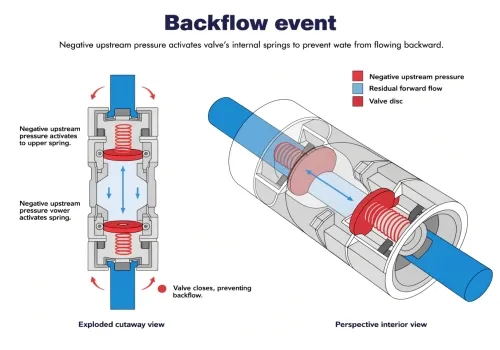
I have seen many engineers ask why two valves are better than one. The answer lies in the engineering concept of redundancy. In a dual check valve, the two checks act as backups for each other. If debris gets stuck in the first check valve, preventing it from sealing tightly, the second check valve remains closed. This maintains the integrity of the line. In my experience at Eflow Valve, we explain it like this: the first valve reduces the water pressure slightly. The second valve reduces it a bit more. This creates a pressure hierarchy that naturally discourages backflow. This is vital for systems where you have "backpressure" or "backsiphonage." Backsiphonage happens when negative pressure sucks dirty water back into the clean pipe. Backpressure happens when the downstream pressure is higher than the supply pressure. The dual check valve handles both scenarios effectively for low-to-medium hazard situations. For a purchasing manager, this means you are buying a "fail-safe" component. You are not just buying a pipe fitting; you are buying insurance against system failure. It is a smart choice for EPC projects where long-term reliability is a key metric for your end-user. When you understand what is a dual check valve, you realize it is the most cost-effective insurance for your pipeline.
Budget constraints always fight against safety requirements in every project I have supplied. You need to find the sweet spot between cost and performance without violating local codes. This comparison helps you make the right purchasing decision for your specific application. A single check valve offers minimal protection and is prone to failure. A Reduced Pressure Zone (RPZ) assembly offers the highest protection but is expensive and complex. The dual check valve sits perfectly in the middle, offering reliable safety for medium hazards at a reasonable cost.
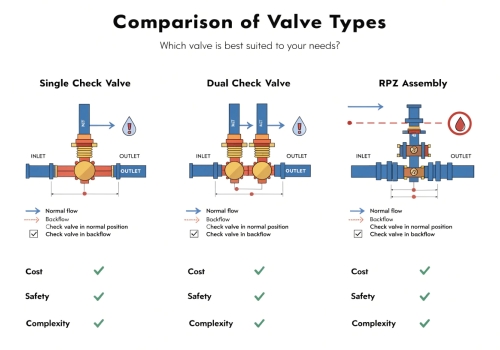
When I talk to clients about sourcing, they often confuse these three types of valves. It is crucial to distinguish them to save costs without sacrificing safety. A single check valve is a simple non-return valve. It is cheap, but if it gets stuck open, you have zero protection. I rarely recommend these for critical potable water lines because the risk is too high. On the other end of the spectrum, we have the Reduced Pressure Zone (RPZ) assembly. This is the heavy-duty option. It has two check valves and a relief valve that dumps water out if something goes wrong. It is extremely safe but very expensive and requires drainage. If your installation site does not have a floor drain, you cannot use an RPZ. The dual check valve is the industry workhorse. It does not require a drain like the RPZ, making it easier to install in tight spaces. It is significantly more reliable than a single check. Here is a simple breakdown to help you evaluate your project needs:
| Feature | Single Check Valve | Dual Check Valve | RPZ Assembly |
|---|---|---|---|
| Redundancy | None | High (Double barrier) | Very High (Relief valve) |
| Hazard Level | Low Hazard | Medium Hazard | High Hazard |
| Cost | Low | Moderate | High |
| Maintenance | Simple | Moderate | Complex (Needs testing) |
| Drain Required | No | No | Yes |
For most residential and light industrial applications in your EPC projects, the dual check valve is the most efficient choice. It balances the budget while meeting the necessary safety standards for potable water.
Poor installation ruins even the best equipment, leading to angry clients. You want to avoid callbacks and expensive repairs after the project handover. Following these protocols ensures the system lasts for decades and passes all inspections. You must install these valves in an accessible location, typically 12 inches to 5 feet above the floor. They require annual testing to ensure both internal checks are functioning. Proper clearance is mandatory for technicians to reach the test cocks.
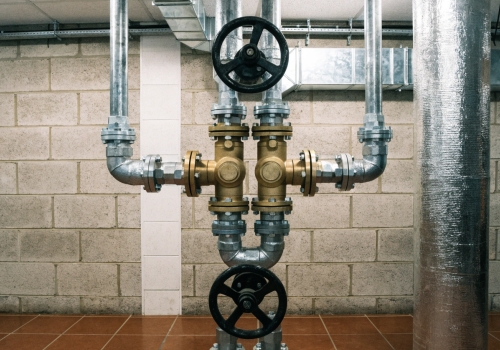
I always tell my customers that buying quality valves from Eflow Valve is only half the battle. The other half is installation. A dual check valve is sensitive to debris. If you install it in a dirty pipeline without flushing the system first, particles will trap the check valves open. This renders the device useless immediately. You need to install strainers upstream of the valve. This is a small cost that saves huge headaches. Also, consider the orientation. While many dual checks can work vertically, you must check the manufacturer's manual. Vertical flow-down installations are often prohibited because gravity can mess with the spring action, causing the valve to stay open when it should close. Maintenance is another area where I see EPC companies struggle. These are not "install and forget" devices. They have "test cocks"—small ports that allow a certifier to check the pressure. Your design must leave enough room for a technician to attach their gauges. If you put the valve tight against a wall, it cannot be tested. If it cannot be tested, it is not compliant. Finally, protect the valve from freezing. If your project is in a cold climate, the valve body will crack if water freezes inside. Insulation or heated enclosures are necessary steps in your procurement planning. We often see valves fail simply because the purchasing manager did not account for the environmental conditions of the installation site.
A dual check valve is your balanced solution for preventing backflow, offering redundancy and safety at a moderate cost. It protects water integrity effectively when installed and maintained correctly. By understanding what is a dual check valve, you can make smarter procurement decisions that ensure the long-term success of your piping systems. At Eflow Valve, we understand the pressures you face as a Purchasing Manager. You need products that meet international standards like ISO and CE, and you need a supplier who understands the EPC timeline. We evolved from Centerway Steel to specialize in these critical components. We provide high-quality, inspected check valves that fit your budget and your technical requirements. Whether you need a dual check valve for a commercial building or heavy-duty industrial valves for an oil project, we are your one-stop integrated supplier. Let us help you secure your pipelines and your project success.



 English