
Pipeline leaks cause huge losses. You struggle with poor fluid control. I will show you how an industrial control valve solves these flow problems fast. An industrial control valve is a mechanical device that regulates the flow, pressure, temperature, or level of fluids. It responds to signals from a controller to open, close, or throttle fluid flow. This valve ensures safe and efficient operation in your pipeline systems.
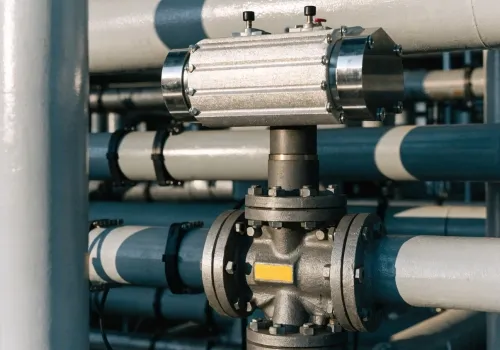
Selecting the right valve feels hard. You must know the basics first. I will guide you through the details now. Reading this will save you time and money.
System failures ruin production. You hate replacing broken parts. I will explain the core components now. You can spot issues early after you read this part. An industrial control valve works by using an actuator to move a stem and a closure element. The actuator receives signals from a system controller. This movement changes the flow passage size. This action accurately controls the fluid rate and pressure in your pipes.
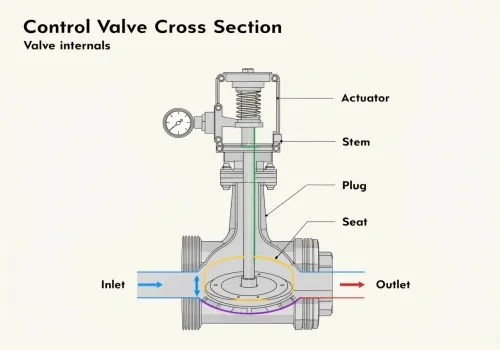
You must look at the valve as two main parts. The valve body handles the fluid. The actuator provides the power.
The actuator acts as the muscle. It moves the internal parts. You can choose different actuators. You make this choice based on your power source. A pneumatic actuator uses air. An electric actuator uses a motor. A hydraulic actuator uses fluid. You must match the actuator to your site conditions. Remote areas often use electric actuators. Air supply is hard to get there.
The fluid passes through the valve body. The stem connects the actuator to the closure element. The closure element presses against the seat. This action stops flow. This action also allows flow. The valve leaks if the seat wears out. You must choose hard materials for the seat. I always check the seat material before I approve a design.
| Component | Main Function | Common Problem |
|---|---|---|
| Actuator | Moves the stem | Loses signal or power |
| Stem | Connects parts | Bends under high pressure |
| Seat | Seals the flow | Wears out from fast fluid |
Picking the wrong valve destroys pipes. You feel confused by too many choices. I will break down the main types. This guide makes your choice easy. Engineers divide industrial control valves into linear and rotary types. Linear valves use a straight push motion. Rotary valves use a turning motion. You use linear valves for precise control. You use rotary valves for fast shut-off and high flow.
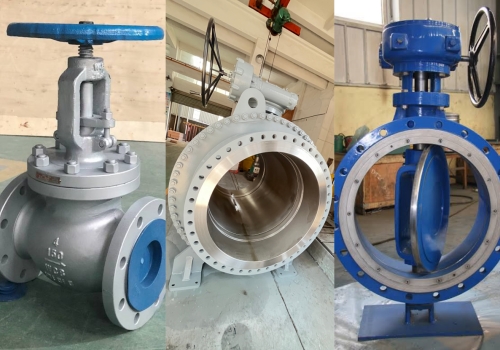
Linear valves move in a straight line. I use globe valves for exact flow control. The fluid makes an S-shape turn inside a globe valve. This gives you great control. This shape also lowers the fluid pressure. You must use gate valves only to stop flow. You must not use gate valves to control flow. A half-open gate valve will shake. It will break soon.
Rotary valves turn a quarter way to open or close. I prefer ball valves for fast shut-off. A ball valve has a hole in the middle. It lets a lot of fluid pass quickly. Butterfly valves are flat. Butterfly valves are light. You should use butterfly valves for very big pipes. They cost less money. They take up less space.
You must look at your fluid and your space. Thick fluids need rotary valves. Clean fluids can use linear valves.
| Valve Type | Motion | Best Use | Weakness |
|---|---|---|---|
| Globe | Linear | Exact control | Lowers pressure |
| Gate | Linear | On/Off shut | Shakes if half open |
| Ball | Rotary | High flow shut | Hard to control small flows |
| Butterfly | Rotary | Big pipes | Needs big turning force |
Oversized valves waste money. You worry about causing system shutdowns. I will share my sizing method and a real project story. This knowledge guides your next purchase. You size an industrial control valve by calculating the flow coefficient. This number shows how much fluid passes at a specific pressure drop. You must also check the fluid temperature and pressure limits. You must select the right fail-safe position for emergencies.
You must calculate the flow coefficient first. We call this value Cv. A valve that is too big will close too much. This action damages the seat. A valve that is too small stops your production. You need to keep the normal flow between 20% and 80% open.
I want to share a story about a water pipeline project in Africa. The client had big leaks. Bad valve sizes caused these leaks. The hot weather and sandy water ruined their old valves quickly. I flew to the site for Eflow Valve. I checked their pipe pressure. I chose our heavy-duty butterfly valves with hard seats. We shipped the valves fast. Our valves worked perfectly under the hot sun. This project proved our mature experience in the African market. We know how to handle harsh conditions. We deliver real solutions.
You must match the metal to the fluid. Standard steel works for clean water. You need stainless steel for strong chemicals. You also must plan for power cuts. A fail-closed valve shuts down. This action stops danger. A fail-open valve stays open. This action cools the system down.
| Selection Step | What to Check | Why It Matters |
|---|---|---|
| 1. Size | Cv calculation | Stops fast wear |
| 2. Material | Fluid type | Stops rust and holes |
| 3. Safety | Power loss state | Prevents big accidents |
An industrial control valve keeps your pipeline safe. You must calculate the exact size and pick the right type. Contact Eflow Valve for professional valve solutions today.
Q: What happens if I choose a fail-closed industrial control valve?
A: A fail-closed valve shuts completely when it loses power. You use this type for steam or fuel lines. This action stops dangerous fluid flow during a power failure.
Q: How do I know the capacity of my valve?
A: You calculate the flow coefficient. Engineers call this the Cv value. This number tells you the water volume that passes through a fully open valve in one minute. A correct Cv keeps your valve stable.
Q: What is the difference between linear and equal percentage flow?
A: Linear flow changes directly with the valve movement. Equal percentage flow changes by a constant rate. You use equal percentage flow for most long pipeline systems.
Q: Can I use a gate valve to control fluid flow?
A: No. You must use gate valves only to start or stop flow completely. A half-open gate valve will vibrate. This vibration destroys the valve quickly.



 English